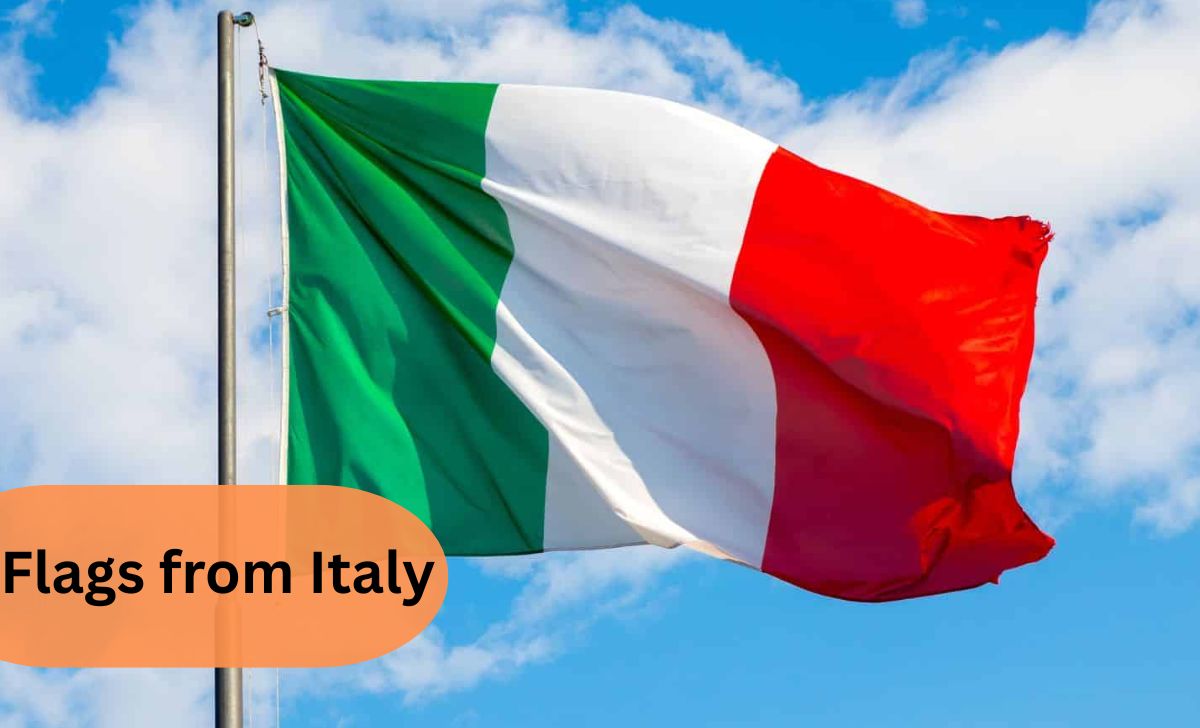
When we hear the phrase flags from Italy we often imagine the elegant green, white, and red tricolour waving gracefully in the wind. But beyond the surface of those colors lies a deep and layered history, a story of revolution, unification, monarchy, republic, war, peace, and pride. The flag is not just a national symbol; it’s a canvas that has absorbed Italy’s rich cultural, political, and historical heritage.
In this in-depth article, we will explore the origin of the Italian flag, its evolution through different eras, variations used by institutions and regions, and its continued relevance in modern Italian life. From its earliest revolutionary inspiration to its legal status today, the story of Italian flags is a reflection of Italy itself, complex, beautiful, and deeply symbolic.
The flags from Italy represent the country’s rich history, unity, and cultural identity. From the iconic green, white, and red tricolour to regional and institutional variations, each flag tells a unique story of Italy’s past, symbolizing national pride, resilience, and deep-rooted traditions across generations.
In This Article, We Discuss “Flags from Italy”
The Birth of the Italian Flag – Revolutionary Roots and Early Adoption
The modern flag of Italy, known as Il Tricolore, was first adopted in 1797 by the Cispadane Republic, a short-lived Napoleonic republic in Northern Italy. It was the time of the French Revolution, and revolutionary ideas were spreading rapidly across Europe. Inspired by the French tricolour (blue, white, and red), Italian revolutionaries adapted their own version using green, white, and red colors that were already associated with various Italian militias and civic banners.
The choice of green is believed to have originated from the uniforms of the Milanese civic guard, while red and white were common in many Northern Italian coats of arms. These three colors soon became more than just a military or political statement; they became the symbol of Italian identity, unity, and a desire for independence from foreign powers.
Symbolism in the Italian Tricolore – More Than Just Colors
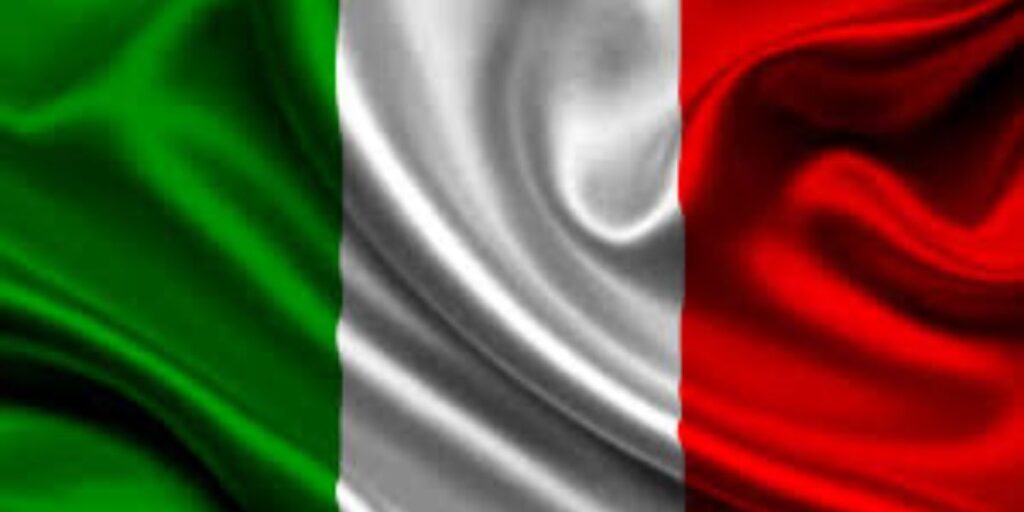
Each color on the Italian flag has a unique meaning, and over time, several interpretations have emerged. One of the most accepted symbolic readings of the flag is that green represents hope, white represents faith and peace, and red stands for charity or the bloodshed for the country’s unification and freedom.
There’s also a geographic interpretation where green stands for Italy’s rolling plains and hills, white symbolizes the snow-capped Alps, and red represents the blood of patriots who fought in the wars of independence. These layers of symbolism show how the flag embodies both the land and the spirit of the Italian people. It’s a poetic reflection of both the natural beauty and the historic struggles that have defined the Italian nation.
From Kingdom to Republic – How the Flag Evolved Through History
After the unification of Italy in 1861 under King Victor Emmanuel II, the flag was adopted as the official national banner of the new Kingdom of Italy. However, a small but significant change was made to the royal coat of arms of the House of Savoy, which was added at the center of the white stripe. This transformed the flag from a revolutionary symbol into the emblem of a constitutional monarchy.
This version of the flag remained in use for decades, through world wars and regime changes. But in 1946, after a national referendum abolished the monarchy, Italy became a republic.
The new Republic of Italy removed the Savoy emblem, returning the flag to its original tricolour form. This was more than a design decision; it was a symbolic return to democratic and republican ideals.
Italian State and Institutional Flags – Official Variations of the Tricolour

While the plain green, white, and red vertical stripes make up the national flag, several official institutions in Italy use modified versions of the flag to distinguish their status. One such version is the State Flag of Italy, which features the national tricolour with the Emblem of the Italian Republic in the center.
This emblem includes a five-pointed white star over a cogwheel, flanked by olive and oak branches, symbolizing peace, labor, strength, and unity.
The Presidential standard is another version that includes the emblem of Italy on a blue background with golden details, used exclusively by the President of the Republic. Similarly, the naval ensign features the tricolour with a unique shield representing the four historic maritime republics: Venice, Genoa, Pisa, and Amalfi.
These variations all adhere to strict design rules and serve specific functions, representing the government, military, and maritime forces.
Rules and Regulations – Flag Etiquette and Legal Framework in Italy
Italy takes the display and use of its flag very seriously. There are detailed protocols for how the flag should be displayed, its dimensions, colors, and the occasions for flying it. According to Italian law, the flag must always be respected. It cannot be altered, defaced, or used for commercial purposes unless explicitly permitted.
On national holidays such as Festa della Repubblica (Republic Day) on June 2nd, flags are displayed on public buildings, and official ceremonies are held across the country.
During national mourning, the flag is flown at half-mast. The law also mandates that the flag must be clean, in good condition, and properly oriented with green on the hoist side when displayed.
Schools often include flag etiquette in their civics education, teaching students not just how to display the flag, but also why it matters. These laws and customs ensure that the flag continues to be seen as a solemn and respected national symbol.
Flags from Italy’s Regions – Local Identity and Cultural Diversity
Italy is a unified republic, but its regions retain strong cultural identities, many of which are expressed through unique regional flags. These flags reflect local history, dialects, legends, and political traditions. While they are not used as substitutes for the national flag, they hold cultural and ceremonial significance.
For example, the flag of Sicily features a figure called the Trinacria, a gorgon head with three bent legs, symbolizing the triangular shape of the island. Sardinia’s flag, known as the Four Moors, features four black heads wearing white headbands, a symbol with medieval roots. The flag of Tuscany often includes a red Pegasus, representing Renaissance freedom and imagination.
These regional flags often appear during local festivals, sports competitions, and municipal ceremonies. They add richness to Italy’s cultural landscape and remind us that the unity of the nation exists alongside a celebration of diversity.
Flags in Italian Popular Culture – National Pride in Everyday Life
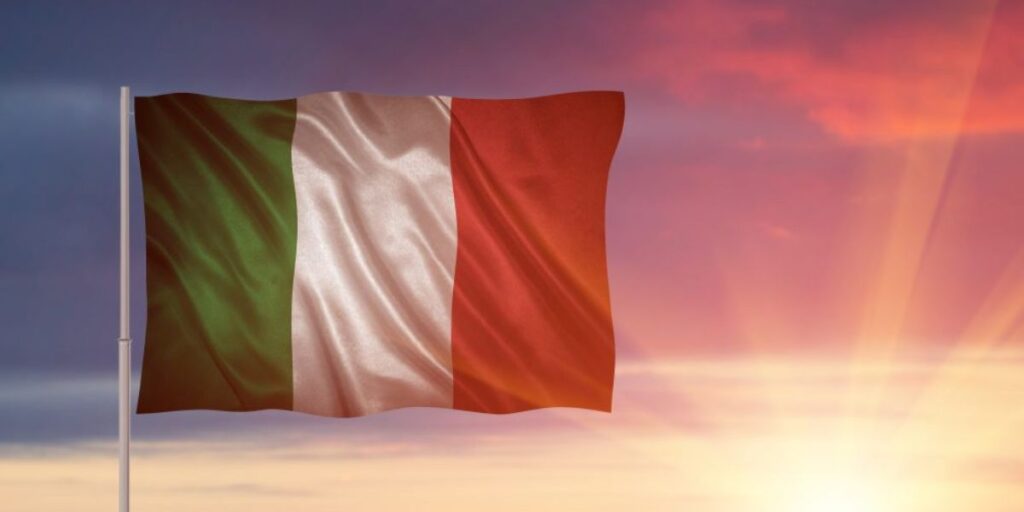
The Italian flag is not only reserved for official use. It plays a major role in popular culture, especially in sports, music, cinema, and design. Whenever the Italian national football team plays in major tournaments like the FIFA World Cup or UEFA European Championship, streets, homes, cars, and even faces are painted with the tricolour.
In Italian fashion, the flag often appears in subtle ways, with major designers using green, white, and red in collections to represent national pride. In films and media, the flag is frequently used to symbolize resilience, especially in narratives about post-war Italy or national unity during crisis.
Even everyday items, such as coffee mugs, clothing, stationery, and souvenirs, proudly feature the flag. This widespread presence reinforces its power as a unifying symbol and connects Italians of all backgrounds to a shared identity.
Craftsmanship and Manufacturing – How Italian Flags Are Made
Creating a flag may seem simple, but in Italy, the manufacturing of the national flag is often treated with care and craftsmanship. Flags are made from durable materials like polyester or high-quality cotton, designed to withstand sun, wind, and rain. The dyes used are colorfast and match exact specifications to ensure that every green, white, and red stripe is vibrant and true.
Ceremonial flags are sometimes made with silk and hand-embroidered details, especially those used by the President or military branches. These flags require weeks of work and are considered artisanal products.
Italian flag makers often follow traditional methods that reflect the same pride found in other areas of Italian craftsmanship, like tailoring, furniture making, and glass blowing.
Flags from Italy Compared to Similar Designs – Confusion and Clarity
The Italian flag is often confused with other flags that use similar colors or arrangements. One of the most commonly confused is the Mexican flag, which also features vertical green, white, and red stripes. However, the Mexican flag includes a detailed coat of arms in the center with an eagle, a snake, and a cactus, making it much more intricate.
The French flag is another tricolour, but its stripes are blue, white, and red, and the order differs. Ireland’s flag also uses green and white but substitutes orange for red, and its stripes are vertical too. Hungary’s flag has the same colors as Italy’s, but arranged in horizontal stripes rather than vertical stripes.
These comparisons highlight how even small differences in design or symbolism can set flags apart. Despite these similarities, the Italian flag maintains its distinct identity through historical context, symbolism, and national pride.
Preserving the Past – Restoration and Exhibition of Historic Flags

In Italy’s many museums, historical flags are preserved as part of the nation’s heritage. These include banners from independence wars, military campaigns, royal parades, and fascist-era processions.
Preserving them requires delicate work by textile conservators who stabilize aging fabrics, clean historic dyes, and sometimes even reweave missing sections.
These flags are displayed under controlled lighting, humidity, and temperature to prevent further decay. When presented to the public, they are usually accompanied by detailed documentation explaining their origins and role in Italy’s historical development. Seeing these flags in person allows visitors to connect with the lives and struggles of
FAQs
1. What is the significance of the flags from Italy?
The flags from Italy, especially the national tricolour, symbolize the country’s rich history and national identity. Each color represents specific values: green for hope, white for peace, and red for sacrifice. Together, they reflect Italy’s journey toward unity and independence.
2. When was the Italian flag first adopted?
The Italian flag was first adopted in 1797 by the Cispadane Republic, a short-lived Napoleonic state. Inspired by the French tricolour, it became a symbol of revolution and Italian nationalism. It was officially adopted by the modern Italian Republic in 1946.
3. What are the meanings behind the colors of the Italian flag?
The green on the Italian flag represents the country’s plains and hills, symbolizing hope. White stands for the snow-covered Alps and peace, while red honors the blood of patriots who fought for Italy’s independence. These colors embody both geography and sacrifice.
4. Are there different versions of the Italian flag used officially?
Yes, besides the national tricolour, there are official variants like the State Flag featuring the emblem of the Republic. The naval ensign includes symbols of historic maritime republics. These variations represent different branches of government and historical legacies.
5. How do regional flags in Italy differ from the national flag?
Italy’s regions have unique flags representing local history, culture, and traditions. For example, Sicily’s flag features the Trinacria symbol, while Sardinia’s shows the Four Moors. These regional flags coexist with the national flag, celebrating Italy’s cultural diversity.
6. What laws protect the flags of Italy?
Italian law strictly regulates the use and display of the national flag. It must be treated with respect and cannot be altered or used for inappropriate purposes. The flag is displayed during national holidays and official ceremonies following detailed protocols.
7. How is the Italian flag used in modern culture?
The flags from Italy appear prominently in sports, especially football, where fans proudly display the tricolour. The flag is also common in fashion, music, and tourism, symbolizing national pride and Italy’s cultural influence worldwide.
8. What makes the Italian flag unique compared to similar flags?
While some countries have flags with similar colors, Italy’s flag is distinct due to its vertical stripes and simple design. Unlike Mexico’s flag, it lacks an emblem, and unlike France’s, the colors and their order differ, making Italy’s tricolour instantly recognizable.
9. What is the significance of the emblem on some Italian flags?
Some official flags, like the State Flag, feature the emblem of Italy, which includes a star, a gear, an olive, and oak branches. This emblem symbolizes unity, labor, peace, and strength, adding deeper meaning to the basic tricolour during governmental and military use.
10. How are flags from Italy manufactured with quality and tradition?
Italian flags are made with high-quality materials like durable polyester and cotton, ensuring longevity and vibrant colors. Ceremonial flags often involve hand embroidery and traditional craftsmanship, reflecting Italy’s dedication to preserving both national symbols and artisanal heritage.
Conclusion
The journey of the flags from Italy is a powerful reflection of the country’s transformation through centuries of revolution, unity, struggle, and pride. From the first adoption of the tricolour in 1797 to its modern-day presence across sports stadiums, government buildings, and cultural events, the Italian flag stands as a timeless symbol of national identity.
Each variation, whether used by the military, the presidency, or regional governments, carries its own historical weight and cultural relevance.
Understanding the meaning behind the colors, the laws protecting its use, and the emotional connection Italians have with their flag allows us to appreciate its importance beyond simple design.
The flags from Italy are more than just cloth and color; they are expressions of history, unity, and the unbreakable spirit of a nation. As Italy continues to evolve in a globalized world, its flags remain deeply rooted in tradition while still inspiring future generations with their enduring symbolism.
Read more
Horse Daily Sleep—A Complete Guide!
Thing One And Two—A Complete Guide!