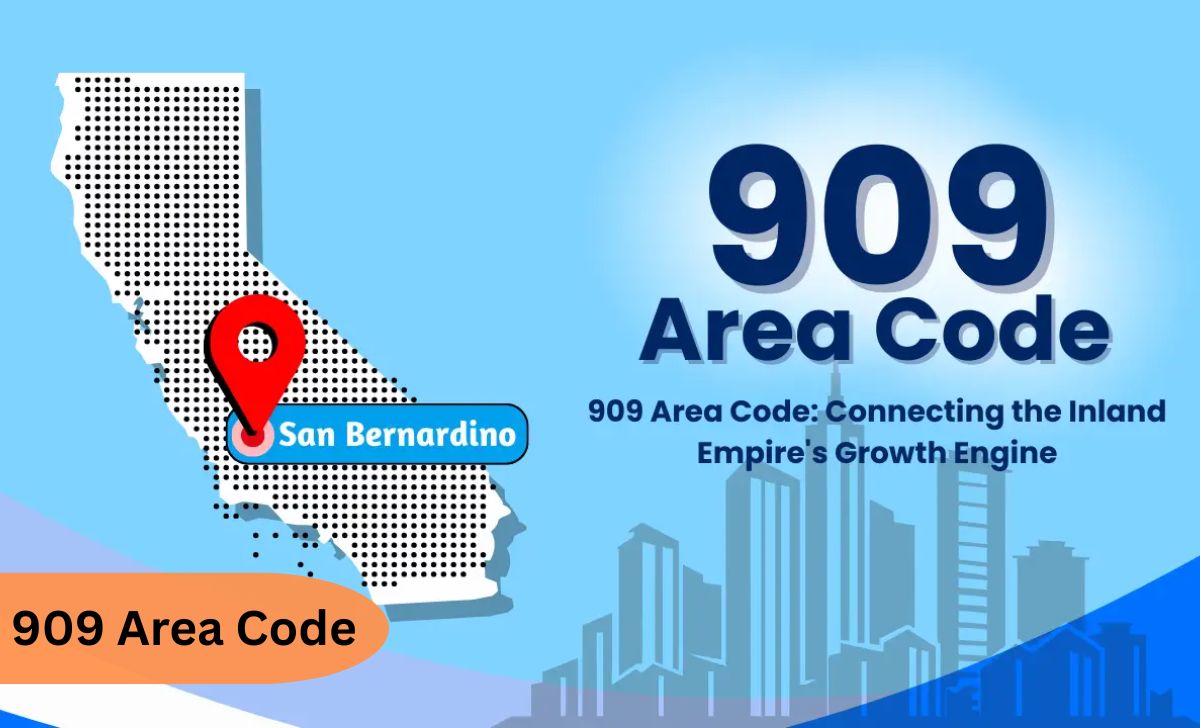
The 909 area code is a key telephone prefix in Southern California, covering a large portion of the Inland Empire. Created in 1992, it has grown alongside the population and technology demands of the region.
From cities like San Bernardino and Ontario to Pomona and Redlands, the 909 area code has become part of the area’s identity. With changes like the 951 split and the 840 overlay, it reflects the evolving communication landscape.
This article explores its history, coverage, significance, and current dialing rules. Whether you’re a resident, business owner, or just curious, this complete guide will give you everything you need to know.
The 909 area code serves parts of Southern California, including cities like San Bernardino, Ontario, and Pomona. It was created in 1992 and now shares the region with the 840 overlay due to growing demand for new phone numbers.
In This Article, We Discuss the “909 Area Code”
What Is the 909 Area Code and Where Is It Located?
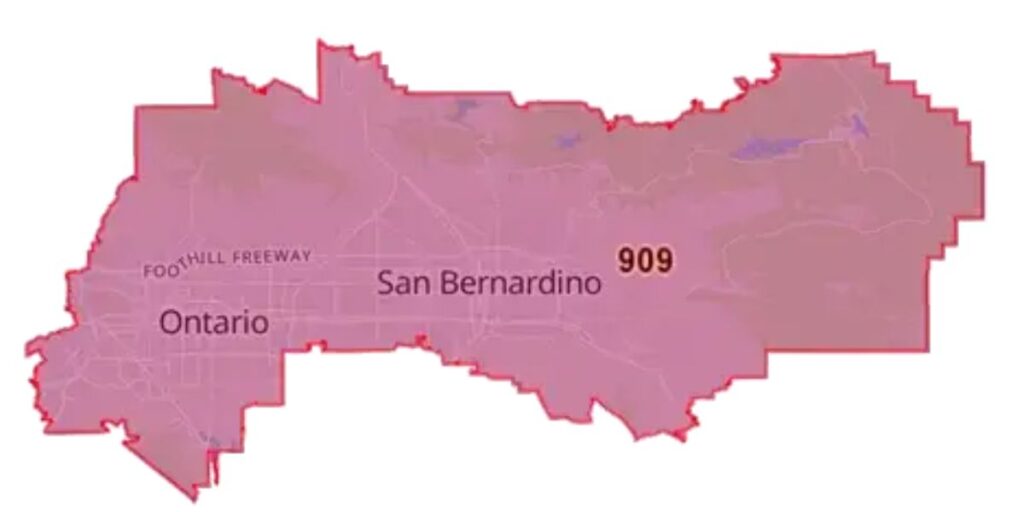
Area code 909 is a telephone area code in Southern California, part of the North American Numbering Plan. It covers parts of San Bernardino County, eastern Los Angeles County, and small portions of Riverside County.
This area includes many suburban and semi‑urban communities in the Inland Empire region. The code helps route calls to that geographic region and distinguish it from neighboring zonesIt is an essential identifier for phone lines, business numbers, and residential services in that locality.
History and Evolution of the 909 Area Code
The 909 area code was born in response to growing demand for telephone numbers in Southern California. It was created in 1992 as a split from area code 714 to relieve pressure in the numbering system.
Over time, population growth and increased device usage led to further changes, especially the split that created area code 951 in 2004. More recently, an overlay addition of area code 840 was introduced to share the same territory.
These evolutionary steps reflect efforts to manage finite numbering resources while keeping service smooth for users.
Cities and Regions Covered by Area Code 909
Within its boundaries, 909 serves major cities such as San Bernardino, Ontario, Fontana, Pomona, Chino, and Redlands. It also includes many smaller communities in eastern Los Angeles County and parts of southwestern San Bernardino County.
While much of Riverside County uses 951, some areas near the border still fall under 909. Because the overlay (840) shares the same geography, new numbers in the same places may carry either 909 or 840.
This regional mapping defines local identity and the reach of the area code.
How the 909 Area Code Was Created from 714
Before 1992, the southern and eastern parts of California were largely served by area code 714. As telephone demand surged, the 714 territory became overloaded. To manage this, a geographic split was implemented in November 1992, carving out a new region assigned as 909.
At that time, many users had to change their area code but keep their phone numbers. This split allowed the numbering capacity to expand and made room for future growth in the newly defined 909 zone.
The 951 Split – What Happened to the Original 909 Area?
By the early 2000s, even the expanded 909 region faced an increasing number of exhaustion. To reduce the strain, in July 2004, parts of western Riverside County previously under 909 were reassigned to the newly created 951 area code.
That change limited 909’s coverage in Riverside but allowed more focused management of numbering. Some border areas, however, retained 909 under special rules.
The split helped balance demand across neighboring codes and preserved the orderly distribution of new numbers.
Current Dialing Rules for 909 and 840 Area Codes
With the overlay in place, ten‑digit dialing (area code + seven-digit number) is now required for all calls, even local ones within the same region. That means whether calling someone with a 909 or 840 number, you must always dial all ten digits.
This ensures correct routing and avoids confusion between overlapping codes. Some systems (alarms, auto‑dialers) needed updates to accommodate the change. The requirement simplifies number allocation while maintaining consistent call connections.
Ten‑Digit Dialing – What It Means for 909 Users

Ten‑digit dialing means users can no longer rely on dialing just the seven‑digit phone number locally; they must always include the area code. That change was necessary because overlapping area codes could have the same seven digits but different area codes.
This prevents misrouting or failed calls in the shared region. For many users, that meant updating stored contacts, alarm systems, printed materials, and dialing habits. Though it adds a small extra step, it enables smoother operations in a dense numbering environment.
Major Cities and ZIP Codes in the 909 Area Code
Some of the most prominent cities covered by 909 include San Bernardino, Fontana, Ontario, Pomona, Chino Hills, Upland, Redlands, and Rancho Cucamonga. The ZIP codes in these cities span a wide range, reflecting varied neighborhoods and subdivisions.
Because 909 spans across several counties, ZIP codes from Los Angeles, San Bernardino, and parts of Riverside intermix within the same area code.
This overlap means businesses and services often serve across multiple ZIP zones under the same telephone area code. Understanding local ZIP + area code combinations helps with telecommunications planning and service delivery.
Popular Landmarks and Institutions in the 909 Region
The 909 region includes significant educational institutions, logistics hubs, and cultural landmarks. Universities and community colleges draw students across the Inland Empire.
Several major freeways, transportation centers, and warehouses lie within its boundaries, playing roles in Southern California’s commerce. Historic downtown districts, parks, and regional centers also fall under 909.
Many hospitals, governmental offices, and schools in these cities use 909/840 numbers. The area code thus serves as a subtle backdrop to daily life and local landmarks.
Economic and Demographic Profile of the 909 Area
Economically, the 909 region is a mix of industrial, commercial, residential, and service sectors. Logistics, manufacturing, distribution, and warehousing are major employers due to proximity to major highways and ports.
The population is diverse in ethnicity, income levels, and occupations. There is a mix of older neighborhoods, growing suburbs, and developing corridors.
These demographics create demand for telecommunications and digital services and influence how telephone numbering is managed.
909 Area Code in Pop Culture and Local Identity
The term “the 909” is often used locally as a cultural identifier, embraced by residents as part of their regional identity. In music, social media, and local events, “909” is sometimes referenced to signal pride in Inland Empire roots.
Because of its association with outlying or less glamorous parts of Greater Los Angeles, it has also faced stereotypes, but many locals reclaim it positively.
It shows how area codes can carry emotional and identity weight beyond their technical function. In short, 909 is more than a number; it’s part of local culture.
Mobile Usage Trends in the 909 Area Code Zone
Mobile phone adoption in the 909 region has been strong, reflecting state and national trends. Many residents use multiple devices, smartphones, tablets, and IoT devices, each requiring number assignments.
Because mobile numbers are portable, many nonlocal numbers migrated into the area, adding to the numbering demand. Carriers must manage blocks of mobile prefixes carefully to avoid exhaustion.
Growth in mobile usage is one reason overlays like 840 became necessary to expand capacity without disrupting existing users.
Common Phone Scams Reported from 909 Numbers
Like many area codes, 909 is used opportunistically by scammers to mask the origin of calls. Reports include robocalls, spoofed caller ID, phishing attempts, and fraudulent service calls.
Local authorities sometimes warn people to be cautious when receiving calls from unfamiliar 909 or 840 numbers. Awareness campaigns advise verifying numbers before responding or giving personal information.
Telecom providers may block known scam prefixes or offer call‑filtering tools to protect users in the 909 region.
How to Identify a Number from the 909 Area Code
A phone number starting with 909 (or 840, given the overlay) belongs to that Southern California region. The next three digits (prefix) can give clues about the city or exchange region.
Caller ID systems often display 909 or 840 plus the rest of the number to indicate the origin. Reverse lookup services or phone directories can help map the prefix to the locality.
Though mobile numbers may move, most 909/840 numbers remain associated with the geographic region for routing and billing.
Difference Between 909 and 840 Area Codes
The primary difference is that 909 is the original area code, and 840 is an overlay added later to extend numbering capacity. Both cover the same geographic region.
Existing numbers with 909 stayed unchanged when 840 was introduced; new numbers may use either code. Functionally, calls to 909 or 840 are treated equally in routing. The overlay allows growth without requiring mass number changes among residents.
Will the 909 Area Code Change Again in the Future?
Possibly, though changes would likely take the form of new overlays rather than splits, to minimize disruption. If demand for new numbers continues growing, telecom authorities may introduce additional overlays.
However, current numbering conservation strategies and overlays often delay the necessity for major changes. It’s unlikely existing 909 users will lose their numbers. Any future change would come with long transition periods and public notice to ensure smooth adoption.
Frequently Asked Questions About the 909 Area Code
People often ask when the overlay took effect, whether they must dial ten digits, or if their number will change. Others wonder whether their city still falls under 909 or has moved to 951.
Questions also arise about how to update auto‑dialers, alarm systems, or stored contacts. Another common question is how to recognize scam calls from the 909 region.
Answering these helps visitors and users understand the code’s rules, scope, and implications.
909 Area Code vs Other Southern California Codes
Compared to codes like 714, 818, 323, or 562, the 909 serves more inland and suburban areas. Some of those codes serve denser urban zones, with different economic and demographic characteristics.
The split and overlay history of 909 is similar to other codes in Southern California, but its identity is more tied to the Inland Empire.
Understanding how 909 relates to neighboring area codes helps users and businesses manage regional presence and call routing decisions.
Why Knowing Area Code 909 Is Important for Businesses
For businesses in Southern California, using a local area code like 909 or 840 can signal trust, proximity, and regional presence to customers. It helps with local marketing, call acceptability, and penetration into communities.
Also, understanding dialing rules ensures business systems (voicemail, auto-dials, alarms) remain functional. In sales or service, having a recognizable local number can make a difference. So for companies targeting this region, 909 knowledge is a small but strategic advantage.
FAQs
1. What is the 909 area code?
The 909 area code is a telephone code assigned to parts of Southern California, mainly the Inland Empire region. It includes cities like San Bernardino, Ontario, Pomona, and the surrounding areas.
2. When was the 909 area code created?
The 909 area code was created in 1992 as a split from the 714 area code. It was introduced to handle the growing demand for phone numbers in Southern California.
3. Which cities are included in the 909 area code?
Cities covered by the 909 area code include San Bernardino, Fontana, Ontario, Chino, Rancho Cucamonga, and Pomona. It also includes parts of Riverside and Los Angeles counties.
4. What is the 840 overlay for the 909 area code?
The 840 area code was added in 2021 as an overlay to the same region covered by 909. Both area codes now serve the same geographic area, allowing more phone numbers to be assigned.
5. Why do I have to dial 10 digits for 909 numbers now?
Due to the overlay with 840, 10-digit dialing is now required, even for local calls. This helps prevent confusion between numbers with the same last seven digits but different area codes.
6. What is the difference between 909 and 951 area codes?
Area code 951 was split from 909 in 2004 and now covers most of western Riverside County. While 909 still serves parts of Riverside, 951 is used for newer phone numbers in that region.
7. Is the 909 area code still active?
Yes, the 909 area code is fully active and in use today. New numbers may be issued under 840, but 909 numbers remain valid and widely used across the Inland Empire.
8. Can scammers use the 909 area code?
Yes, scammers can spoof any area code, including 909, to make calls appear local. Always be cautious with unknown callers and verify the source before sharing personal information.
9. How can I tell if a number is from the 909 area?
If a number begins with 909, it typically originates from the Southern California region. However, due to number portability, the exact location may vary, especially for mobile users.
10. Why is the 909 area code important for local businesses?
Having a 909 area code helps businesses appear more local and trusted to nearby customers. It can improve response rates, brand recognition, and marketing success within the region.
Conclusion
The 909 area code is more than just a set of digits; it’s a symbol of community, growth, and connection in Southern California. With its rich history, wide coverage, and cultural presence, it plays an important role in how locals communicate and identify.
Changes like overlays and splits show how the area adapts to population growth and technological needs. From businesses to households, 909 remains a strong and familiar code. Understanding its role helps navigate the region’s evolving telecom network more efficiently and confidently.
Read more
Baja Blast – The Legendary Flavor That Changed Fast Food Forever
Steelers vs Denver Broncos Match Player Stats – The Complete Guide
What is HiAnime? – A Complete Look at Features, Legality, and Safe Use