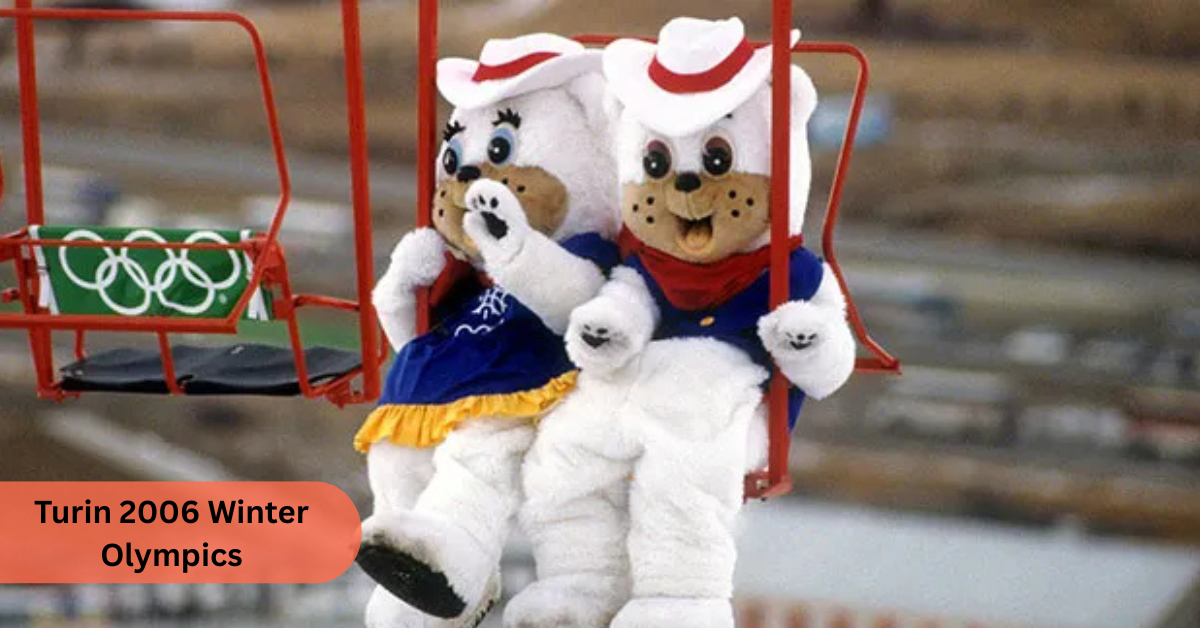
The Turin 2006 Winter Olympics were held in Turin, Italy, from February 10 to 26, 2006, featuring 84 events across 15 winter sports. It was the second Winter Games hosted by Italy, after Cortina d’Ampezzo in 1956. With over 2,500 athletes from 80 countries, the event highlighted stars like Apolo Ohno, Evgeni Plushenko, and the Italian men’s cross-country ski team.
I still remember the Turin 2006 Winter Olympics—the city was alive with energy, and watching athletes compete in person felt surreal. The mix of Italian culture, cheering crowds, and world-class sports made it an unforgettable experience.
In This Article, We Discuss About “Turin 2006 Winter Olympics”
Overview of the 2006 Winter Olympics in Turin:
The Turin Winter Olympics featured 84 medal events across 15 sports disciplines, making it one of the largest Winter Games to date. Ice-based competitions were staged in Turin’s metropolitan center, while snow sports took place in nearby mountain resorts such as Sestriere and Bardonecchia. This dual setup highlighted Italy’s unique landscape urban vibrancy on one hand and breathtaking Alpine beauty on the other.
In terms of scale, Turin 2006 was a massive undertaking. More than 1.1 million tickets were sold, while billions followed the competitions from their homes. The Games were also supported by thousands of volunteers, whose dedication created an atmosphere of warmth and hospitality for athletes and spectators alike.
Key Highlights of Turin 2006:
Every Olympics is defined by iconic moments, and Turin 2006 provided plenty of them. For American fans, Shaun White’s gold medal in snowboarding halfpipe was a defining highlight, marking the rise of a new generation of extreme sports athletes. Italy, as the host nation, celebrated memorable victories in cross-country skiing and speed skating, igniting national pride.
Cultural spectacles also became highlights. The opening ceremony, directed by famed choreographer Daniele Finzi Pasca, stunned the world with its theatrical presentation of Italian art, history, and design. The image of a flaming human figure symbolizing passion remains one of the most unforgettable moments in Olympic ceremony history.
Technology and Media Innovations:

Turin 2006 is remembered as the first digitally modern Winter Olympics. For the first time, the Games offered high-definition broadcasts, live internet streams, and even mobile video clips, which were groundbreaking in 2006. Fans could experience Olympic moments instantly, paving the way for the streaming culture we take for granted today.
The impact of these innovations was immense. The Games reached 3.1 billion viewers, a billion more than Salt Lake City 2002, setting records for global sports viewership. The use of HD cameras, interactive websites, and mobile technology showed that the Olympics were evolving into not only a sporting spectacle but also a digital entertainment event.
Weather and Climate Conditions:
The weather during the Turin Games was unusual compared to past Winter Olympics. In Turin itself, temperatures were relatively mild, often above freezing, giving the city a spring-like atmosphere. Meanwhile, just a short drive away in the Alps, the mountain venues had optimal snow conditions, ensuring smooth competitions.
This duality worked to Turin’s advantage. While city visitors enjoyed concerts, cultural shows, and medal ceremonies in Piazza Castello, athletes competed in perfect snowy environments nearby. This balance of urban culture and mountain sport became one of the defining features of Turin 2006.
Economic Impact of Turin 2006:
Hosting the Winter Olympics brought a significant economic boom to Italy. Studies estimate that the Games generated €17.4 billion for the national economy. The construction industry benefitted most, accounting for over half the added value and creating thousands of jobs in infrastructure, transport, and hospitality.
Employment levels rose between 2001 and 2006, while unemployment dropped, largely due to the Games’ projects. Local businesses, restaurants, and hotels saw surges in demand, and the event accelerated investments in roads, railways, and airport facilities that continue to serve the region today.
Tourism and City Transformation:
Perhaps the most lasting legacy of Turin 2006 was the city’s transformation from an “industrial town” into a cultural capital. Before the Olympics, Turin attracted about 3 million tourists annually. By 2010, that number doubled to 6 million, making it the fourth most visited city in Italy after Rome, Florence, and Venice.
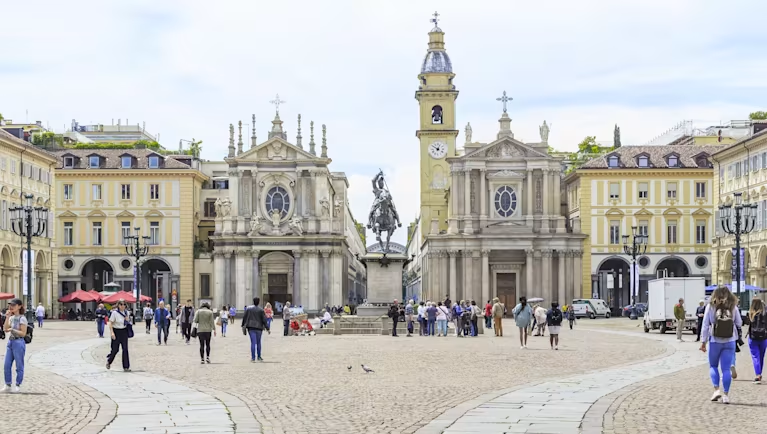
The Games gave Turin global visibility. Piazza Castello, which hosted the medals ceremonies, became a backdrop for international broadcasts that showcased Turin’s rich history and architecture. Suddenly, the world saw Turin as more than Fiat’s home—it was a destination for art, cuisine, and history. This rebranding continues to benefit the city’s tourism industry today.
Environmental Efforts and Sustainability:
Turin 2006 was a pioneer in environmental sustainability among mega-sporting events. The Organizing Committee (TOROC) became the first Olympic body to achieve ISO 14001 certification and EMAS certification for its environmental management systems. This demonstrated a commitment to sustainability well before “green Games” became a trend.
Projects such as the HECTOR program (Heritage Climate Torino) raised awareness about climate change and offset emissions from the Games. It was estimated that the event generated 103,500 tons of CO₂, most of which came from transport and venue operations. Through eco-management, carbon offsets, and sustainable transport policies, Turin 2006 set a standard for future Olympic hosts.
Social and Educational Programs:
Beyond infrastructure and economics, Turin 2006 invested heavily in social and educational initiatives. More than 600,000 schoolchildren across Italy took part in Olympic-themed educational programs. These activities connected sports with lessons on environment, science, technology, and human rights.
For higher education, Turin used the Games as a training ground. Over 500 broadcasting and media students received Olympic-level training, with 400 of them volunteering during the Games. These programs not only supported the event itself but also created professional opportunities that benefitted participants long after the closing ceremony.
Sports Venues and Their Legacy:
A hallmark of successful Olympic Games is how venues are used afterward, and Turin has a mixed record. Out of 14 competition venues, 12 remain in use for sports, entertainment, or cultural events. The Pala Alpitour, built for ice hockey, is now one of Italy’s premier music and event venues, hosting concerts and ATP Tennis Finals. The Palavela, once the stage for figure skating, now serves as a public rink and conference center.
However, not all venues thrived. The Cesana Pariol sliding track, used for bobsleigh and luge, was shut down due to high maintenance costs. Parts of the Olympic Village also faced difficulties in redevelopment. Despite these challenges, Turin still stands out as a host city that effectively repurposed most of its Olympic infrastructure.
Long-Term Legacy of Turin 2006:
The long-term legacy of Turin 2006 is complex but largely positive. Economically, the Games boosted Italy’s GDP and created jobs, while tourism continues to thrive thanks to the city’s rebranding. Socially, hundreds of thousands of students and volunteers benefited from educational initiatives, and a culture of hospitality was fostered across the region.
Culturally, Turin transitioned from being labeled as an industrial city to becoming a hub for art, music, conferences, and sports. Environmentally, it pioneered green initiatives that influenced future Olympics. While some financial criticisms remain especially regarding underused venues the benefits of Turin 2006 continue to shape the city and its people nearly two decades later.
Conclusion:
The Turin 2006 Winter Olympics stand as a turning point in Olympic history—blending sports, culture, and technology in ways that reshaped how the world experiences the Games. While some financial and infrastructural challenges lingered, the event boosted Italy’s global profile and transformed Turin into a cultural hub. Its innovations in digital broadcasting, sustainability, and urban renewal continue to influence future hosts. Nearly two decades later, Turin 2006 is remembered not only for its thrilling competitions but also for the lasting legacy it left behind.
FAQs
1. What happened in the 2006 Winter Olympics?
The 2006 Winter Olympics took place in Turin, Italy, from February 10–26, 2006, featuring 84 events in 15 disciplines. More than 2,500 athletes from 80+ countries competed. Highlights included Italy’s success in speed skating, the U.S. winning in snowboarding, and dramatic figure skating performances. However, it also faced criticism for low attendance at some venues.
2. What was the only city to reject the Olympics?
The only city to ever reject hosting the Olympics was Denver, Colorado, which had been awarded the 1976 Winter Olympics. Citizens voted against it in a 1972 referendum, mainly due to rising costs, environmental concerns, and lack of support. The Games were then relocated to Innsbruck, Austria.
3. Was Turin Olympics considered successful?
Yes, the Turin Olympics were considered a sporting success with memorable performances and a well-run competition. However, financially it was less successful, with the city and region left with debts and underused venues. Still, it boosted Turin’s global recognition and showcased Italian culture beautifully.
4. How cold was it during the 2006 Olympics?
The weather in Turin during the Games was relatively mild for winter, averaging around 5–7°C (41–45°F) in the city. In the alpine venues, temperatures dropped lower, often below freezing, providing good snow conditions. While not the coldest Games, it was still chilly enough for true winter sports.
5. What legacy did the Turin Olympics leave?
The Turin Olympics left a mixed legacy. On one hand, it modernized infrastructure, improved transportation, and placed Turin on the international map. On the other hand, many venues became “white elephants,” rarely used after the Games. Still, it remains a point of pride for Italy in winter sports history.
6. Which Olympics have turned a profit?
Very few Olympics have turned a profit. Notable examples include Los Angeles 1984, which made a large surplus through corporate sponsorships, and Barcelona 1992, which boosted tourism and city development. Most Olympics, however, run at a financial loss due to high infrastructure and operational costs.
7. What was considered the best Olympics ever?
Many consider Barcelona 1992 Summer Olympics one of the best ever, thanks to its vibrant opening ceremony, efficient organization, and long-lasting impact on the city’s development. Among Winter Games, Vancouver 2010 is often praised for its balance of sports success, city transformation, and positive global image.
8. What is one example of a failed Olympics host?
One of the most criticized Olympics was the 1976 Montreal Summer Olympics, which went massively over budget, leaving the city with debt that took 30 years to pay off. While the event itself was memorable, financially it is often called a failure.
9. What was the worst Olympics held?
The 1972 Munich Olympics are often remembered as one of the worst due to the tragic terrorist attack that killed 11 Israeli athletes. Despite attempts to continue the Games, the tragedy overshadowed the competition and remains a dark chapter in Olympic history.
10. What was the coldest Olympics ever?
The 1994 Lillehammer Winter Olympics in Norway are often cited as the coldest, with temperatures plunging below -11°C (12°F) and even colder in mountain venues. Athletes had to compete in extreme conditions, making it one of the most challenging Winter Games weather-wise.
Read more
How Much Juice Is In One Lime—A Complete Guide!